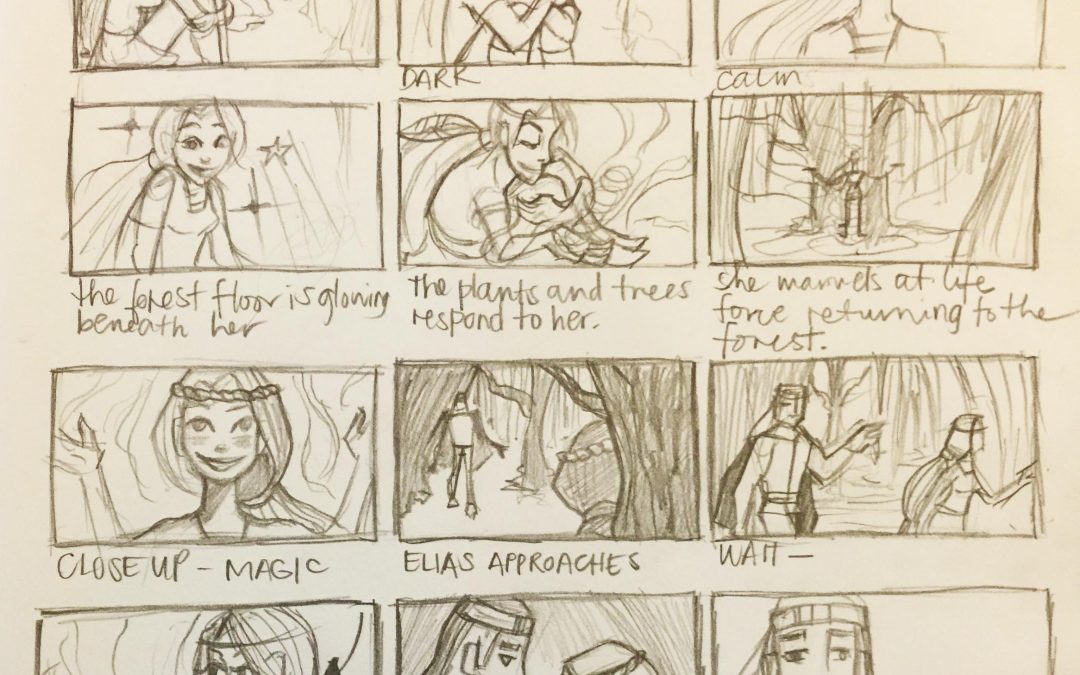
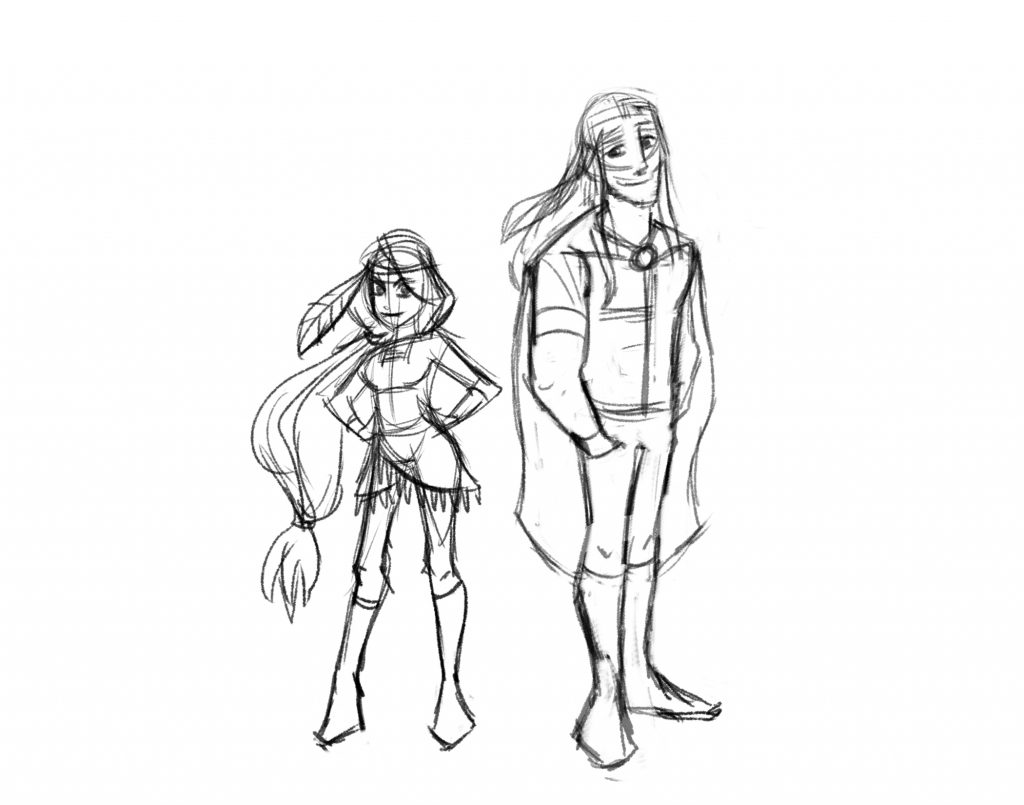
If you’ve ever opened your sketchbook and immediately felt pressure to “make something good,” you’re not alone.
Most artists don’t struggle because they lack talent — they struggle because perfectionism kills ideation. The moment you expect a sketch to be portfolio-worthy, your brain stops exploring.
That’s why I love teaching sketching as what it really is:
A thinking tool. A visual language. A way to explore story before detail.
Sketching is thinking (not finishing)
When you sketch, you’re not just drawing — you’re:
- testing ideas quickly
- asking visual questions
- staging a moment
- discovering what the story actually is
A rough sketch can be a note. A question. An experiment. A first draft.
And that’s where the magic happens.
What are thumbnails (and why they work)?
Thumbnails are small, quick sketches that help you explore a scene without pressure. They force you to focus on what matters most:
- What’s happening?
- What emotion should we feel?
- Where does the eye go first?
You don’t need perfect anatomy or clean lines to tell a story moment. You need clarity.
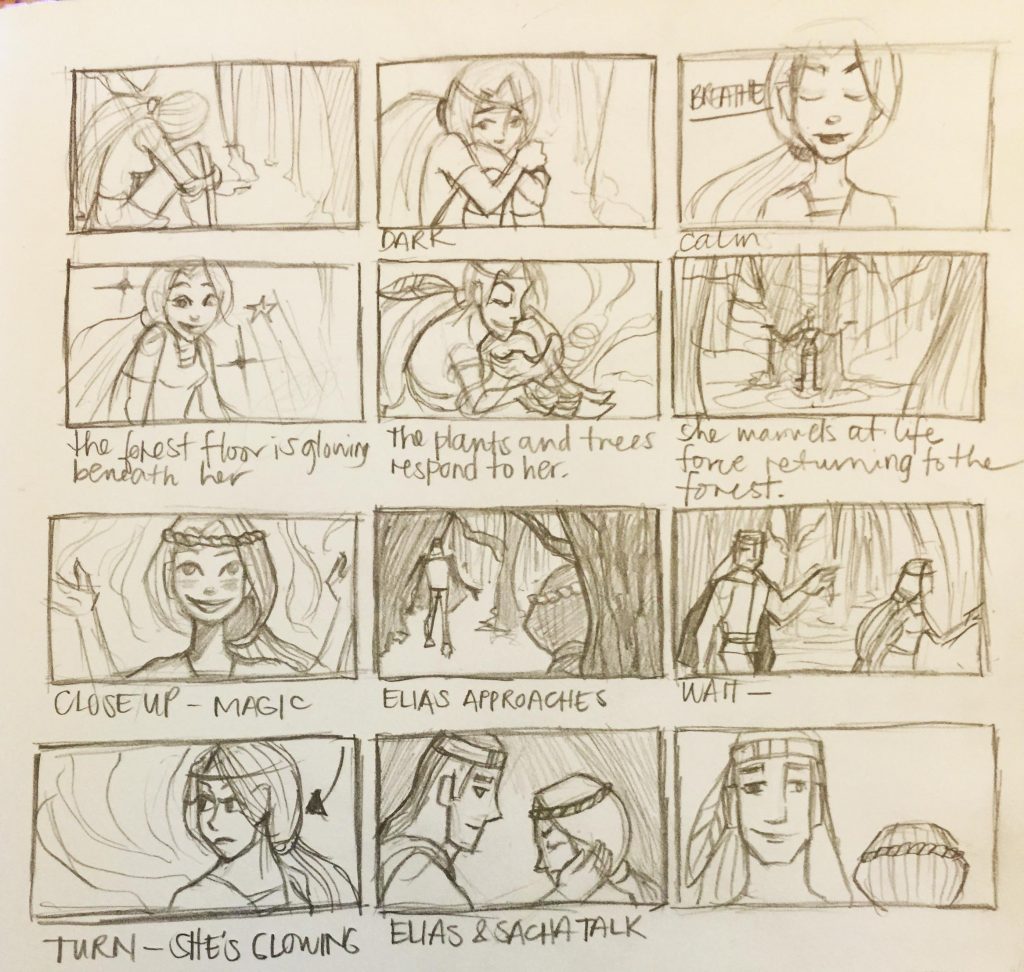
A simple method: horizon + focus + stick figures
One of the easiest ways to start any scene is:
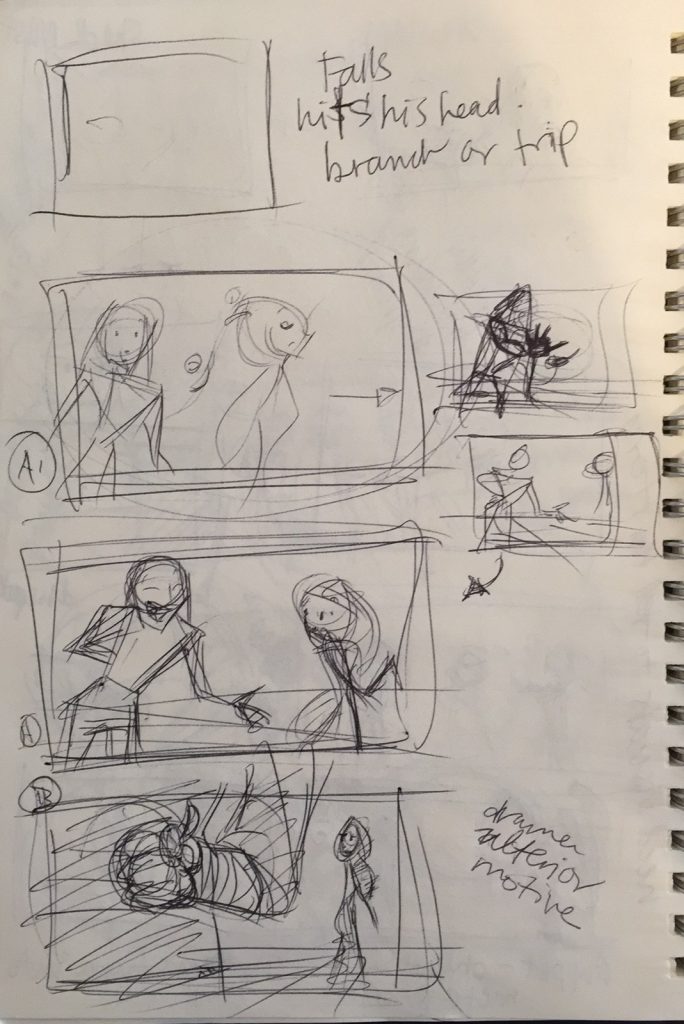
- Drop in a horizon line (instant space and perspective)
- Place the focal point (rule of thirds is a helpful starting tool)
- Use stick figures + big shapes (emotion, staging, readability)
This is how concept artists and story artists generate options quickly — before they ever “polish” anything.
Register for the Free Live Workshop on LinkedIn
Wednesday January 14th! 12:15 – 12:45 pm PST.
Register for the event here:
https://www.linkedin.com/events/introtosketchingforstorytelling7413999428908310528/theater
For the longer course, check it out at Origin Art Academy:
Introduction to Sketching for Storytelling
https://courses.originartacademy.com/products/courses/intro-to-sketching-for-storytelling
